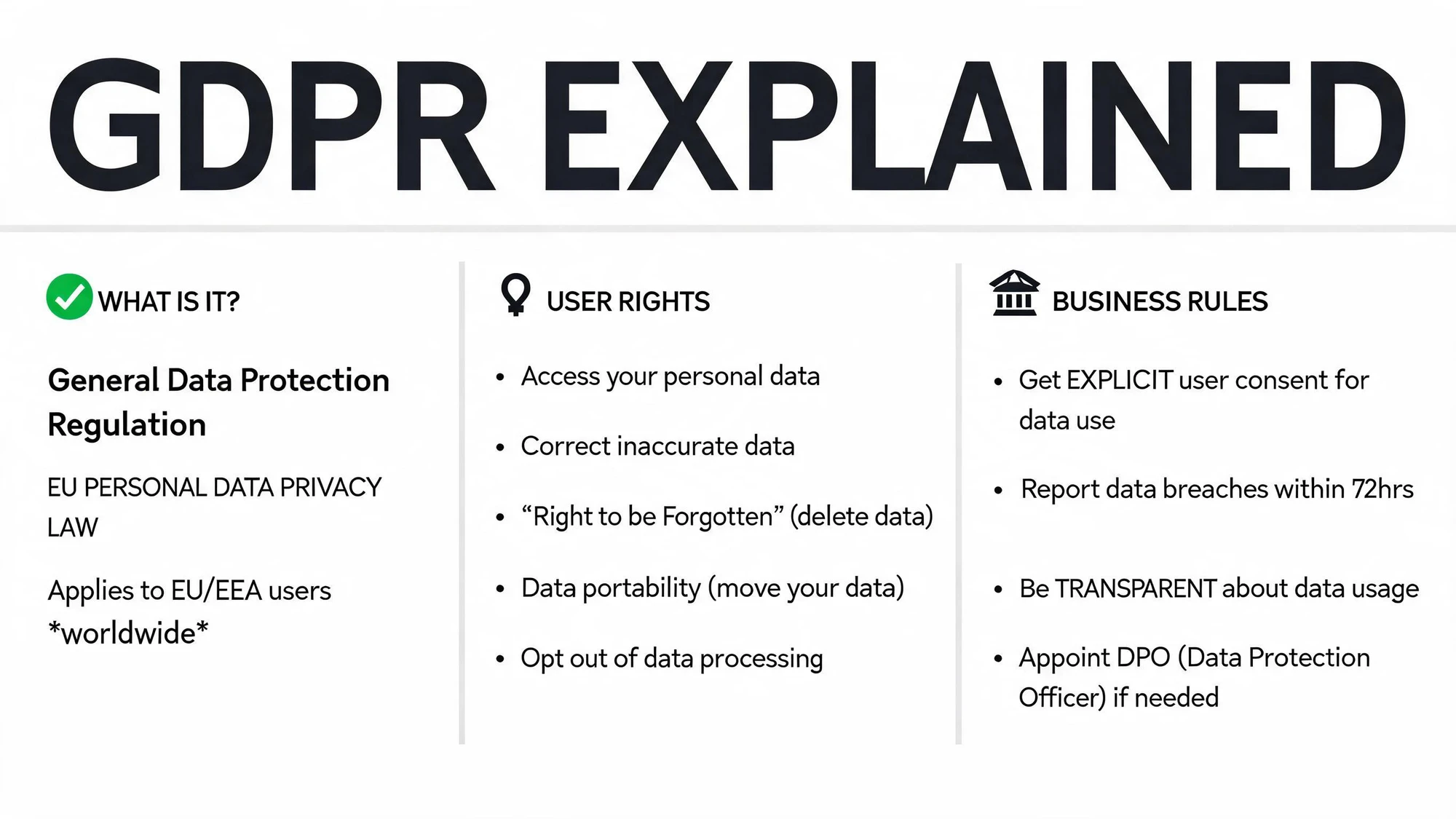
The General Data Protection Regulation, or GDPR, is a law that protects people's personal data in the European Union. It gives individuals control over their data and holds businesses accountable for how they handle it. In this article, we will break down what GDPR means for you and your business, and how you can ensure you are following its guidelines.
Key Points of GDPR
- The right to access and erase personal data
- The right to rectify inaccurate data
- The right to object to data processing
- The right to lodge a complaint with a supervisory authority
What is GDPR?
The General Data Protection Regulation is a comprehensive data protection law in the European Union that replaces the 1995 Data Protection Directive. It aims to strengthen data protection for all individuals within the EU and addresses the export of personal data outside the EU. The GDPR sets a single set of rules for all companies operating in the EU, making it easier for businesses to comply and for individuals to understand how their data is being used.
How Does GDPR Affect Businesses?
GDPR affects businesses by requiring them to be more transparent about how they collect, store, and use personal data. Companies must ensure they have a lawful basis for processing personal data, such as obtaining consent from individuals or having a legitimate interest. They must also implement appropriate security measures to protect data from breaches and notify authorities in case of a breach. Additionally, businesses must respect individuals' rights under GDPR, such as the right to access and erase their data.
The GDPR is a major step forward for individuals' rights, and it is essential that businesses take the necessary steps to comply with its requirements.
Conclusions and Recommendations
In conclusion, GDPR is an essential law that protects individuals' personal data and holds businesses accountable for their data handling practices. To comply with GDPR, businesses should conduct a data audit, update their data protection policies, and provide training to their employees. If you are unsure about how to comply with GDPR or need assistance with data protection matters, consider consulting with a legal expert like Mario De Santos Ionut Junior Avocat. By taking the necessary steps to comply with GDPR, you can ensure the trust and loyalty of your customers and maintain a competitive edge in the market.